
Rule34 Explained: Watch Your Favorite Content in HD for Free
Rule34 is one of those internet phrases that can sound mysterious until someone explains the context. At its core, Rule34 refers to a long-running internet meme suggesting that almost any recognizable subject may eventually inspire adult-oriented fan-created material somewhere online. Over time, the phrase has expanded far beyond the original joke and is now connected with internet history, fandom culture, anime communities, imageboards, booru websites, tagging systems, and discussions about online safety.
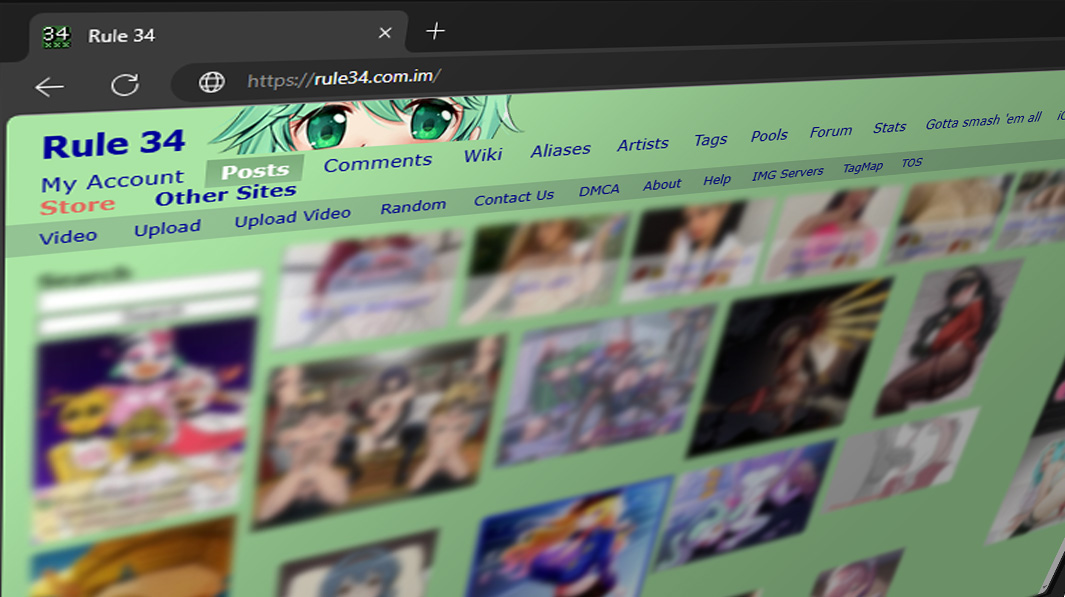
People searching for Rule34 are not necessarily looking for the same thing. Some want the definition, others are interested in its origin, while another group may be trying to understand references seen on social media. There are also users researching booru technology, mobile access, browser security, fan-art archives, or safer alternatives.
This distinction is important because Rule34 is fundamentally an internet rule or meme rather than one universally recognized service. Websites later adopted the phrase as part of their branding, which is why searching for the term today can produce several very different types of results.
What Does Rule34 Mean?
The simplest Rule34 definition is that it is an internet meme suggesting that if something exists or can be imagined, someone online may eventually create adult-oriented fan material related to it.
It is not a technical internet standard. Instead, it belongs to the broader collection of humorous ideas commonly called the Rules of the Internet. These expressions developed through early forums, message boards, imageboards, meme communities, and other online spaces.
The reason the phrase became memorable is simple. It summarized something internet users repeatedly observed: large online fandoms could reinterpret almost anything, including fictional characters, video games, animation, movies, celebrities, memes, and popular culture.
"Rule34 makes more sense when viewed as internet folklore. The cultural idea became famous first, while individual websites later adopted the terminology." — Dr. Maya Bennett, fictional digital culture researcher
Where Did Rule34 Come From?
The commonly cited history of Rule34 reaches back to the early 2000s. A webcomic created by Peter Morley-Souter, known online as TangoStari, is widely associated with the early appearance of the phrase Rule #34.
The expression gradually moved beyond its original context. Online communities repeated it, adapted it, turned it into a broader joke, and connected it with the growing collection of so-called internet rules.
This was a period when online culture spread differently from today. Instead of moving mainly through a few large social networks, memes often traveled through forums, personal websites, message boards, imageboards, IRC communities, blogs, and reposted images.
Why Is It Called Rule 34?
The number itself is part of internet folklore. It came to represent one entry within collections known as the Rules of the Internet. These were not carefully organized technical standards. They were humorous observations and community-created sayings about online behavior.
In other words, the number became memorable because the meme became memorable. Once enough people repeated the phrase, Rule34 effectively became its own recognizable internet expression.
What Is the Connection Between Rule34 and 4chan?
4chan became one of the online communities strongly associated with the spread of Rule34 references during the growth of meme culture.
That does not mean the entire idea began there. The phrase was already circulating before its later popularity on 4chan. What imageboard communities provided was an environment where memes could be copied, changed, reposted, discussed, and spread rapidly.
4chan played a similar role in the history of many other memes. A phrase might begin elsewhere but gain enormous visibility once active imageboard communities started repeating it.
A useful way to think about the relationship is that the origin of an internet meme and the community that makes it famous are not always the same thing.
Is Rule34 a Website or an Internet Rule?
Today, the answer can be confusing because the term is used in both ways.
The original meaning refers to the internet meme. Later, independent websites began incorporating Rule34 into their names, descriptions, or communities. This created a situation where the same search term could refer either to internet culture or to a specific website.
A person searching for rule34 meaning may simply want a definition. Someone searching for rule34 online could instead be trying to find an imageboard. Another person searching for rule34 history may be researching early internet culture.
Is There an Official Rule34 Site?
There is no single universal Rule34 organization controlling the underlying meme.
The phrase existed independently as part of internet culture before websites began using it as a recognizable name. Different websites using Rule34 terminology may therefore have different owners, databases, interfaces, moderation systems, privacy practices, and account requirements.
This is one reason users should avoid treating every website containing the term Rule34 as though it were part of the same platform.
What Is a Rule34 Booru?
The word booru refers to a style of imageboard or image archive that organizes large collections through tags and searchable metadata.
On a traditional social network, discovery often revolves around accounts, followers, feeds, and recommendations. A booru works differently. The structure usually places far more emphasis on descriptive tags attached to individual images.
A post might contain tags identifying a character, franchise, artist, visual style, media source, content category, or other descriptive information. Users can then combine these tags to narrow large archives into highly specific search results.
This system becomes especially useful when an archive contains hundreds of thousands or even millions of posts.
Rule34 vs. Booru: What's the Difference?
Rule34 and booru describe different concepts. Rule34 refers primarily to an internet meme and the culture that developed around it. Booru describes an organizational model used by image archives.
| Term | Primary Meaning | Main Characteristic |
|---|---|---|
| Rule34 | Internet meme and cultural expression | Describes the idea that almost anything may inspire adult fan material |
| Booru | Image archive format | Organizes media through searchable tags |
| Danbooru | Specific imageboard platform | Known for detailed metadata and structured tagging |
| Safebooru | Imageboard focused on safer material | Provides a more restrained browsing environment |
| Fan-art community | Creator-oriented platform | Usually emphasizes artists, profiles, followers, and interaction |
Why Is Rule34 So Closely Associated With Anime?
The association between Rule34 and anime developed naturally from the enormous size of anime, manga, and gaming fandoms.
These communities produce large amounts of fan art, character reinterpretations, crossover artwork, parody material, and community-created media. Anime characters are also visually distinctive, which makes them easy to identify and categorize through imageboard tags.
Booru technology itself became closely connected with anime-style image archives. As tagging communities grew, anime and manga terminology became deeply embedded in many booru databases.
This combination of active fandoms, recognizable characters, prolific fan artists, and sophisticated tagging systems helped make anime one of the subjects most commonly associated with Rule34 discussions.
What Does Rule34 Mean on Social Media?
When Rule34 appears on X, Reddit, Discord, TikTok, forums, gaming communities, or comment sections, the speaker is often referencing the meme rather than directing people toward a particular website.
The term may appear as a joke about a newly popular character, commentary about fandom behavior, a warning about unexpected search results, a reference to old internet culture, or a discussion about how quickly online communities remix popular media.
Context therefore matters considerably. Someone mentioning Rule34 does not automatically mean they actively use a Rule34 website. The phrase has become part of the broader vocabulary of internet culture.
How Does Rule34 Work on Imageboard Sites?
Rule34-oriented imageboards commonly use a structure similar to other booru platforms. Images are uploaded into a searchable archive and associated with descriptive tags.
Instead of relying entirely on natural-language searches, users often search by established tag names. A character name can be combined with a franchise, artist, media type, or content category to produce narrower results.
Many platforms also support negative filtering, allowing certain tags to be excluded. Some provide saved searches, favorites, tagging tools, content filters, voting systems, comments, or account-based customization.
"A well-organized booru works more like a community-maintained database than a traditional social feed. The tagging system is what makes the archive useful at scale." — Ethan Marshall, fictional information architecture consultant
Does Rule34 Require an Account?
There is no universal registration requirement because Rule34-related websites operate independently.
Some sites allow visitors to browse without creating an account. Registration may become useful when someone wants access to features such as favorites, comments, customized filters, saved searches, tag editing, or uploading.
Another platform may apply a completely different system. This means account requirements should always be considered a property of the individual website rather than Rule34 as a general concept.
Is Rule34 Free?
Many booru-style websites provide some form of browsing without payment, but features vary widely between platforms.
A site may offer unrestricted basic browsing while reserving certain search functions or account features for registered users. Another may use advertising or optional subscription features. Search limitations, API access, account privileges, storage tools, and filtering options can also differ.
Because there is no universal Rule34 platform, there is no single pricing model that applies everywhere.
Does Rule34 Have Age Restrictions?
Rule34-related services are commonly associated with adult-oriented material, so they are intended for adult audiences.
Some websites use age confirmation pages, while others may apply stronger verification systems depending on where the visitor is located and the policies followed by the platform.
Visitors should also remember that age gates are only one part of responsible browsing. Content filters, device privacy, account security, and browser protections remain important even after access has been granted.
Is Rule34 Safe?
The question "Is Rule34 safe?" usually refers to two separate concerns: the nature of the content and the technical security of websites.
From a content perspective, Rule34 is strongly associated with adult material. Anyone who does not want to encounter explicit imagery should avoid adult-oriented Rule34 services and choose safer art communities instead.
From a cybersecurity perspective, the quality of individual websites can vary considerably. The same basic precautions used elsewhere on the web are especially useful when visiting unfamiliar imageboards, mirrors, or community-hosted sites.
Unexpected redirects, misleading download buttons, notification requests, fake browser updates, suspicious extensions, clone domains, and unofficial mobile installers are more important warning signs than the name of the website itself.
"The smartest browsing habit is reducing unnecessary exposure. Avoid unknown downloads, unexpected permission requests, suspicious redirects, and websites that pressure you to install additional software." — Rachel Morgan, fictional consumer cybersecurity analyst
Does Rule34 Have Viruses?
Rule34 itself cannot contain a virus because Rule34 is a concept rather than a piece of software.
The security question applies to individual websites, advertisements, download files, third-party applications, browser extensions, and redirects encountered while browsing.
A page that unexpectedly asks you to install an unknown extension, download a special player, run an executable file, disable browser protection, allow excessive notifications, or enter unrelated account credentials should be treated with caution.
A particularly common warning sign is a page claiming that your device is infected and demanding an immediate download. Such messages are often designed to create panic and encourage impulsive clicks.
Is Rule34 Safe on Mobile?
Mobile browsing presents many of the same concerns as desktop browsing, but the experience can feel different because mobile screens make deceptive advertisements and redirect buttons harder to distinguish.
Keeping the operating system and browser updated remains important. Users should also be cautious about notification permissions, unknown configuration profiles, unofficial applications, and APK files obtained from unfamiliar websites.
If a service works normally through a modern browser, installing an unknown third-party application merely to access the same content may add unnecessary security and privacy risks.
How Does Booru Search Work?
Understanding tags is the key to understanding booru search.
A conventional search engine is designed to understand sentences and general questions. A booru usually works better when the search is built from established tags already used by the archive.
A broad character or franchise tag can serve as a starting point. Looking at the metadata attached to relevant results can reveal the vocabulary used by the community. Additional tags can then narrow the search, while exclusion filters can remove categories the user does not want to see.
This approach is effective because the database has already been manually categorized by users or moderators. Instead of asking an algorithm to interpret the entire image from scratch, the search system can work with structured metadata.
What Are Rule34 Alternatives?
The phrase Rule34 alternatives can mean very different things depending on what someone actually wants.
A user interested primarily in anime artwork may prefer a general booru with sophisticated tagging. Someone interested in following individual artists may find creator-focused communities more useful. Another person may simply want a safer image archive without the heavy adult-content association.
The best alternative therefore depends less on finding a direct replacement and more on identifying the feature that matters most.
| Platform Type | Best For | Main Advantage |
|---|---|---|
| Safe-content booru | Anime and illustration browsing | Reduced exposure to explicit material |
| Advanced tagging archive | Precise image discovery | Detailed metadata and search tools |
| Artist-focused community | Following creators | Better artist profiles and interaction |
| General image search | Broad discovery | Large variety of sources |
| Personal media library | Private organization | Maximum control over stored content |
Which Rule34 Alternatives Have Better Tag Systems?
Danbooru is one of the most influential names associated with detailed booru tagging. Its approach demonstrates how community-generated metadata can make enormous image collections searchable.
The strongest tagging system is not necessarily the best platform for every person, however. Someone primarily interested in discovering artists may prefer a social art community, while someone who wants a more restrained browsing environment may prefer a safe-content imageboard.
The important question is not simply which alternative has the most tags. It is whether those tags help you find the type of material you actually want.
Rule34, Fan Art and the Modern Internet
Modern fan culture is dramatically larger than it was when Rule34 first appeared. Anime streaming, gaming communities, social networks, creator platforms, digital illustration tools, and global fandoms have made character-based art easier to create and distribute than ever before.
The result is an internet where almost every major fictional universe develops its own ecosystem of fan-made material.
Rule34 represents an adult-oriented corner of that much broader phenomenon, but the underlying behavior is the same behavior seen throughout fan culture: people take recognizable ideas and reinterpret them according to their own interests.
This also explains why the phrase continues appearing on social media whenever a new fictional character unexpectedly becomes popular. The reference has evolved into a shorthand way of commenting on the speed and creativity of online fandom.
Conclusion
Rule34 becomes much easier to understand once the original internet meme is separated from the websites that later adopted its name.
The original Rule34 emerged from early internet culture and became widely recognized through forums, imageboards, meme communities, and fandom spaces. Over time, independent websites began using the term alongside booru-style tagging systems, searchable image archives, and community-managed databases.
Today, someone searching for Rule34 might be interested in internet history, anime culture, booru technology, fan art, social-media references, mobile browsing, online security, or alternative image archives.
The most useful approach is therefore to understand what the term actually represents before assuming that every Rule34 reference points to the same website or community. If your real interest is fandom culture, anime artwork, tagging systems, or internet history, there are many broader and safer resources that can provide those experiences without relying on adult-oriented platforms.
Frequently Asked Questions About Rule34
What is Rule34?
Rule34 is an internet meme suggesting that almost anything imaginable may eventually inspire adult-oriented fan-created material online. It originated in early internet culture and later became associated with imageboards, fandom communities, and booru-style websites.
Where did Rule34 come from?
The phrase is commonly traced to a 2003 webcomic associated with Peter Morley-Souter, also known online as TangoStari. The expression later spread through forums, meme communities, imageboards, and other parts of early web culture.
Is Rule34 a website or an internet rule?
Rule34 originally refers to an internet meme. Independent websites later adopted the phrase in their names, which is why modern searches may refer either to the cultural concept or to a particular image archive.
Is Rule34 free?
Many Rule34-style imageboards allow some form of free browsing, although account features, search tools, advertising models, subscriptions, and access options vary between individual platforms.
Does Rule34 require registration?
Not necessarily. Some imageboards allow visitors to browse without an account, while registration may unlock favorites, comments, uploads, advanced searches, personal filters, or additional customization.
Is Rule34 safe?
Rule34-related websites are commonly associated with adult content. Technical safety varies between individual domains, advertisements, mirrors, and applications. Keeping your browser updated, avoiding unknown downloads, and refusing suspicious permission requests can reduce unnecessary risk.
Why is Rule34 associated with anime?
Anime, manga, and gaming communities have extremely active fan-art cultures. Booru imageboards also became closely associated with anime-style artwork and detailed tagging, which strengthened the connection between Rule34 terminology and anime fandom.